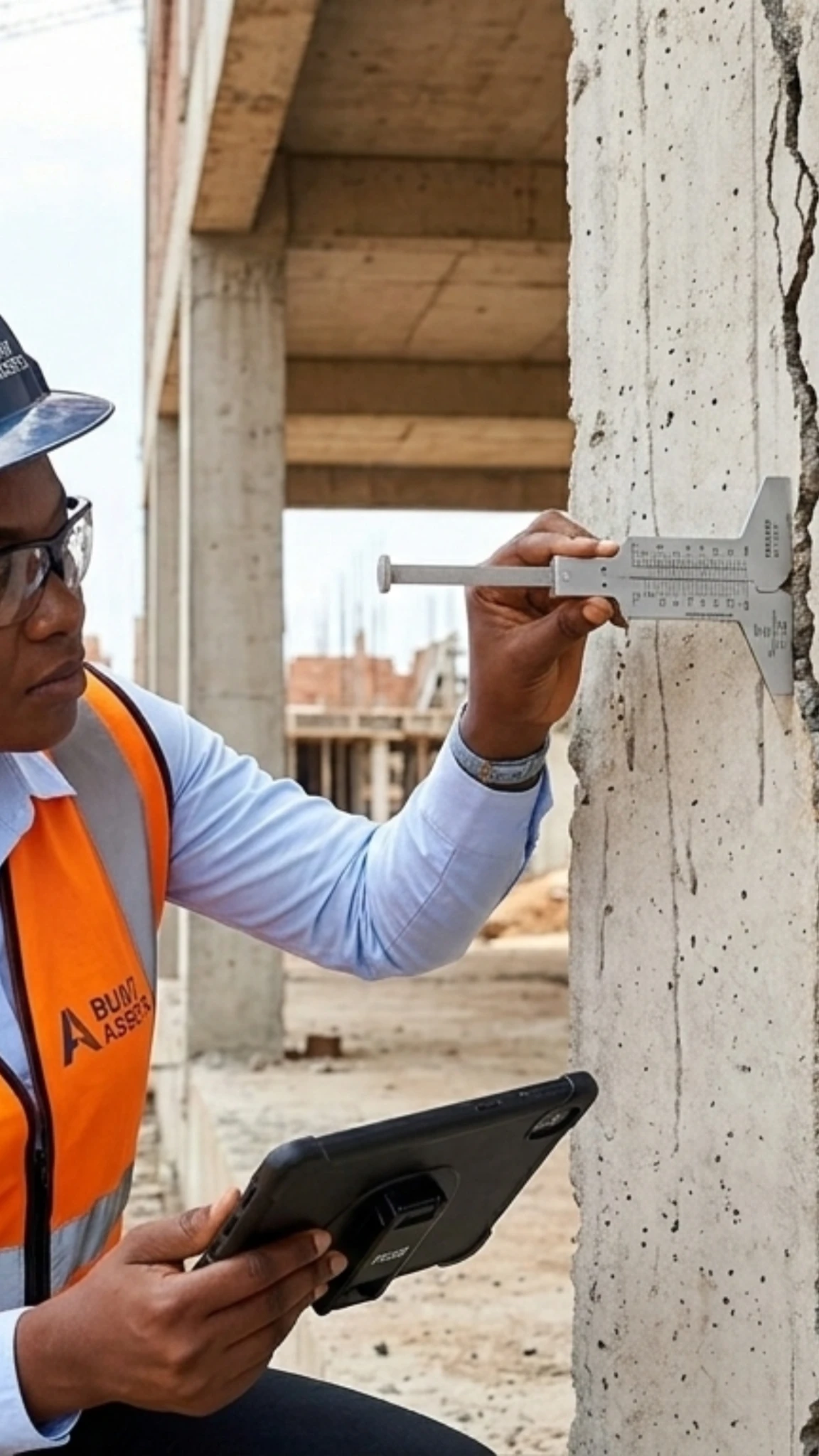
Construction Defects and Cracks in Togo: How to Diagnose and Save a Poorly Executed Project
Few things are more stressful than seeing a major investment deteriorate before construction is even complete. Structural cracks, water infiltration, sagging slabs or walls that are out of plumb can turn a construction project into a serious financial risk when proper technical supervision is lacking.
However, a construction defect does not necessarily mean the project is beyond repair. With the appropriate civil engineering expertise, it may be possible to stabilise, correct and restore the building.
Here is how to regain control of a problematic construction project.
1. Warning Signs: When Should You Be Concerned?
A crack is a symptom, not the underlying problem. The first step is distinguishing cosmetic defects from potential structural issues.
- Foundation cracks: Unlike superficial shrinkage cracks, foundation-related cracks may be deeper and often appear diagonally or in a stair-step pattern. They can indicate structural movement or problems with the soil.
- Water infiltration and damp: Damp patches appearing during the first rainy season in Lomé can indicate waterproofing failure or rising damp from the foundations.
- Poor concrete quality: Weak or improperly proportioned concrete may appear unusually light in colour and can crumble or deteriorate more easily than expected.
2. The Technical Audit: Investigating the Root Cause
Before attempting cosmetic repairs, the underlying cause of the defect must be identified.
At Built Assets, taking over an existing construction project begins with a technical assessment rather than simply repairing visible damage.
- Load assessment: Are the existing columns and structural elements capable of supporting the final loads of the building?
- Reinforcement assessment: Detection equipment can be used to assess reinforcement within concrete and determine whether its configuration is consistent with the structural requirements.
- Geotechnical assessment: Where no soil investigation was carried out initially, additional investigations may be required to assess ground-bearing conditions, particularly in low-lying areas around Lomé.
3. The Built Assets Construction Recovery Process
Taking over another contractor’s work is a sensitive operation that requires a rigorous methodology.
- Making the structure safe: Immediate measures may be required to stabilise the building and reduce structural risks.
- Structural reinforcement: Where necessary, columns, foundations or other structural elements can be strengthened according to the engineer’s recommendations.
- Design correction: The existing construction plan can be reviewed and adapted to correct problems in the original design.
- A new contractual framework: The project can then restart on clearer foundations, with an updated schedule, defined responsibilities and technical supervision.
CHECKLIST: 5 Questions to Assess Your Current Construction Site
Ask your contractor these questions. Unclear or undocumented answers may indicate that further technical verification is needed.
| Question to ask | What you should be able to verify | Potential risk |
|---|---|---|
| 1. “Where are the reinforcement drawings?” | Structural drawings validated by the engineer should be available. | Inadequately designed structural elements |
| 2. “What concrete specification is being used for the columns?” | The contractor should be able to provide the specified concrete mix or strength class. | Concrete that may not achieve the required structural performance |
| 3. “How is moisture being managed?” | Appropriate waterproofing or damp-proofing measures should be specified. | Damp, mould and deterioration of finishes |
| 4. “Have concrete samples been tested?” | Where required, test specimens should be sent to a laboratory for strength testing. | Lack of objective evidence of concrete performance |
| 5. “When will the slab formwork be removed?” | The timing should follow the engineer’s specifications and the concrete’s achieved strength. | Cracking, deformation or damage caused by premature removal |
4. Why Entrust Site Supervision to an AMO?
When defects have already occurred, independent technical supervision can help prevent additional problems.
Built Assets’ Assistance à Maîtrise d’Ouvrage (AMO) service acts as the client’s technical representative:
- We define and implement corrective measures based on technical assessments and engineering requirements.
- We monitor the quality of materials and the execution of the work.
- We track progress against the agreed construction schedule.
- We provide the client with greater visibility and control over the project.
Conclusion: Don’t Give Up — Secure Your Project
Seeing a construction project deteriorate can be extremely worrying, but technical solutions may still be available.
Avoid allowing poorly diagnosed problems to be covered up with temporary or cosmetic repairs. The priority is to identify the cause before deciding on the appropriate corrective work.
Is Your Construction Project Showing Warning Signs?
Don’t guess. Measure, inspect and diagnose.
Contact Built Assets for a technical assessment of your construction project.